A Home Built in Exile
In the late 1860s, with the Franco-Prussian War on the horizon, Prussian military conscription was tightening its grip across the German states. Among those who fled was Mathias Schmalschläger, who crossed the border into the Dutch province of Limburg and settled on the Bouwberg hill in Brunssum.
Around 1870, Mathias built a small cottage from wood, straw, and clay along the forest path on the Bouwberg. The half-timbered house — one room deep, with whitewashed panels between dark oak beams — was finished by 1871, when he moved in with his family.
In early records, the name appears as Smalschläger or Schmalsläger — variant spellings that may have been deliberate, helping a fugitive from Prussian conscription stay hidden in his new Dutch homeland.
The Builder: Mathias Schmalschläger
Mathias had worked for the Count of Amstenrade, a local nobleman, and received oak beams as payment — the very timbers that would form the skeleton of his new home. The rest of the wood came from the same source.
Once settled on the Bouwberg, Mathias built a life from the trades common to rural Limburg’s itinerant merchants:
- Rags and scrap metal — collected on daily rounds with a dog cart
- Brushes and brooms — handcrafted from horse tails and pig hair, sold as far as Belgium
- Bread and vlaaien — traditional Limburgish fruit pies, baked in his own bakhuis (bake house)
His wife and children gathered firewood from the surrounding forests to fuel the open hearth and the bake house. It was a modest but self-sufficient existence on the edge of the Brunssum woods.
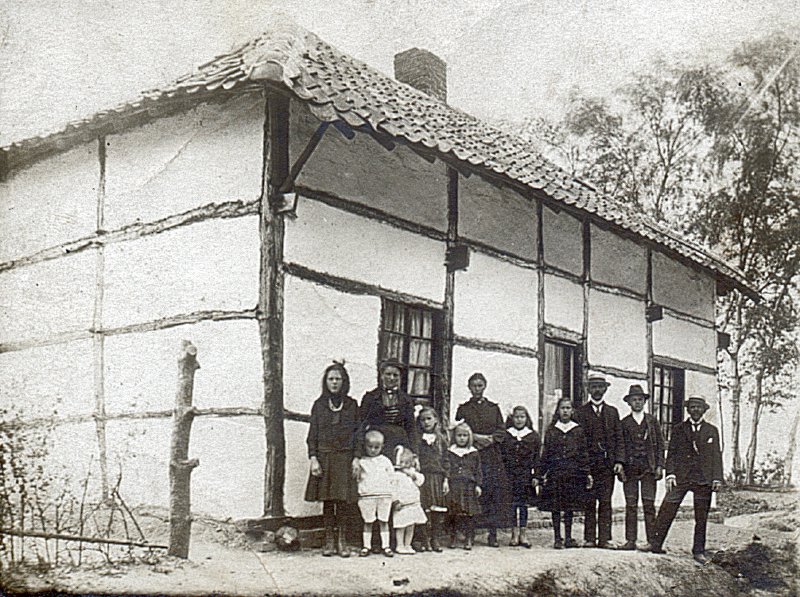
The Cottage
The house at Bouwbergstraat 78 is a vakwerkbouw — a half-timbered construction technique with a history stretching back over 600 years in South Limburg. The method uses a load-bearing frame of oak beams, with the spaces between filled with a mixture of straw, clay, and loam, then whitewashed.
This building tradition, shared with the adjacent German Rhineland and Belgian Limburg, once dotted the landscape of southern Limburg. By the 20th century, most of these modest dwellings had been demolished or replaced. The Bouwberg cottage is one of the few surviving examples of this type of humble worker’s dwelling.
Known locally as het huisje van Duppessjurger — named after the Duppesjurger, Limburgish dialect for a door-to-door pottery peddler. One of the Schmalschlägers who lived here earned his living selling earthenware pots from house to house, and the nickname stuck to the cottage itself.
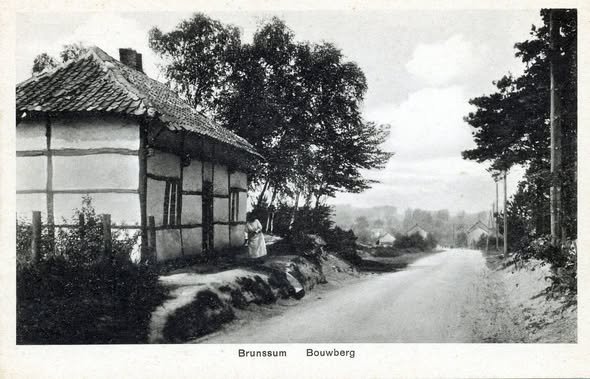
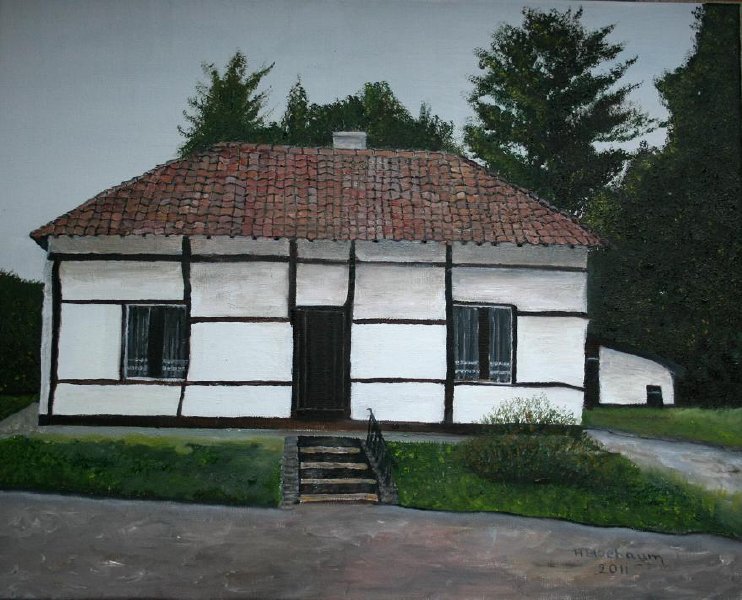
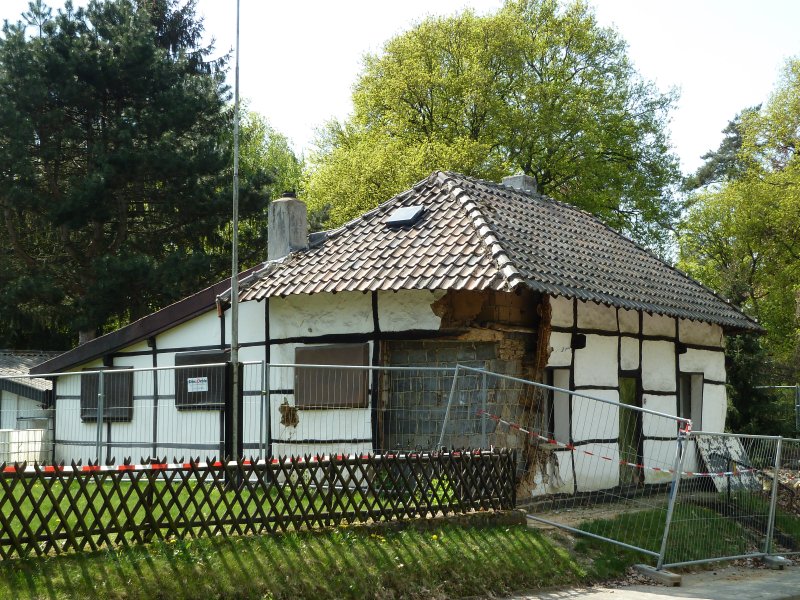
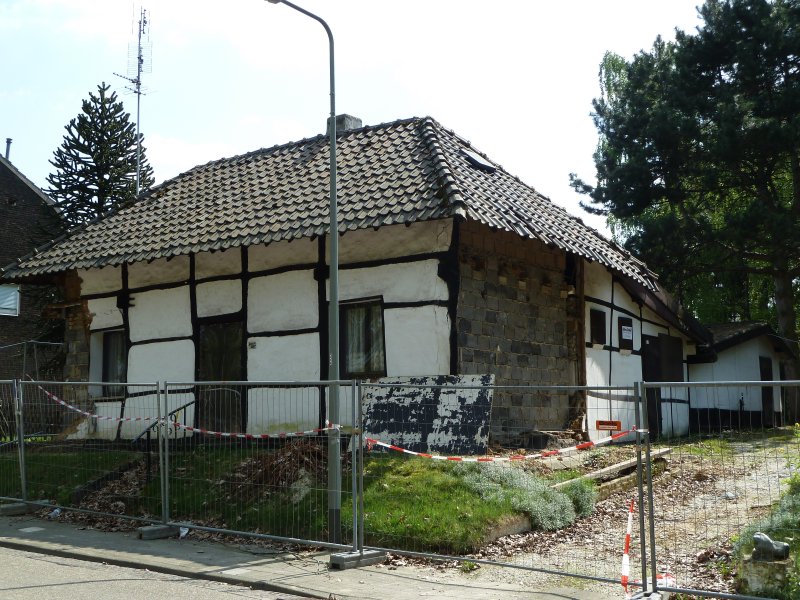
A Rijksmonument
On February 21, 1967, the cottage was designated as a Rijksmonument — a nationally protected heritage site under Dutch law. It is registered as monument #11259.
The official description reads:
“Eenvoudig doch gaaf vakwerkhuis.”
“Simple yet well-preserved half-timbered house.”
The designation recognizes the building as a rare surviving example of the half-timbered dwellings that once characterized the Bouwberg and Oeloven neighborhoods of Brunssum. Its protected status ensures that the structure and its historical character are preserved for future generations.
The Family Continues
The cottage is closely tied to the story of the Dutch Schmalschläger branch. While Mathias was the first Schmalschläger in the Netherlands, his exact connection to the current Dutch family tree remains unknown. The documented Dutch lineage begins with Gerard Schmalschläger (1845–1901), who settled in Brunssum and married Maria Hubertina Notermans. Their descendants remained associated with the Bouwberg address well into the 20th century.
Gerard’s sons included:
- Johannes Gerardus Schmalschläger (c. 1874–1957), who married Maria Agnes Arets
- Johannes Hendrik Schmalschläger (1878–1962), a pottery merchant who married Maria Magdalena Schuffelen
The last Schmalschläger to live in the cottage was Harry Schmalschläger. From this Bouwberg homestead, the family spread across Limburg and beyond — a story that began with a fugitive’s cottage built from oak beams and forest clay.
Location
The Bouwberg cottage sits in the Oeloven/Bouwberg neighborhood of Brunssum, in the southeastern corner of the Netherlands. The area lies between the Brunssummerheide nature reserve and the Schinveldse Bossen forests — a landscape of heath, woodland, and rolling hills that has changed little since Mathias first built his home here.
Sources
- Bouwbergstraat 78 — Wikipedia (NL)
- Rijksmonument #11259 — Rijksmonumentenregister
- Bouwbergstraat 78 — Historical Marker Database
- Foto’s Brunssum — Facebook (community archive)
- Photos: Bouwbergstraat 78 — Wikimedia Commons
- Vakwerkhuisje in Brunssum — Henk Bloebaum
- Stamboom Schuffelen — Genealogieonline.nl