Current Condition — The Bouwberg House

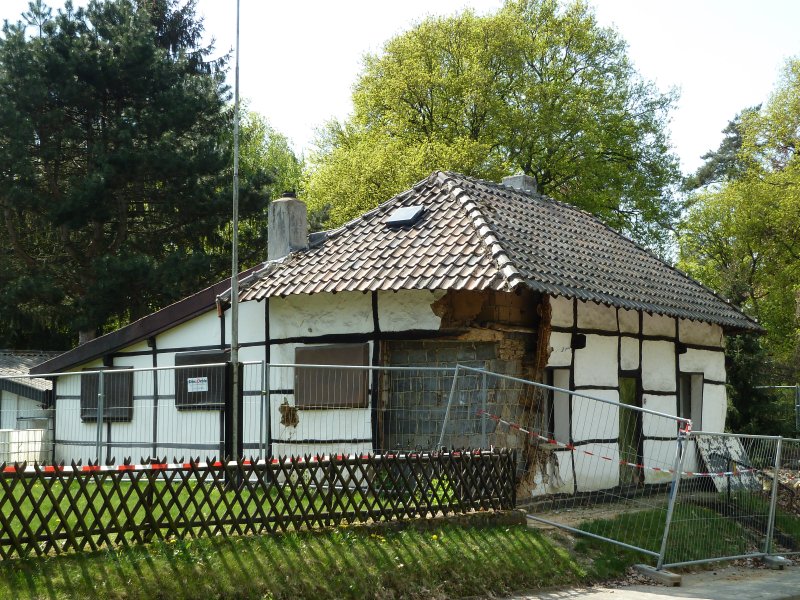
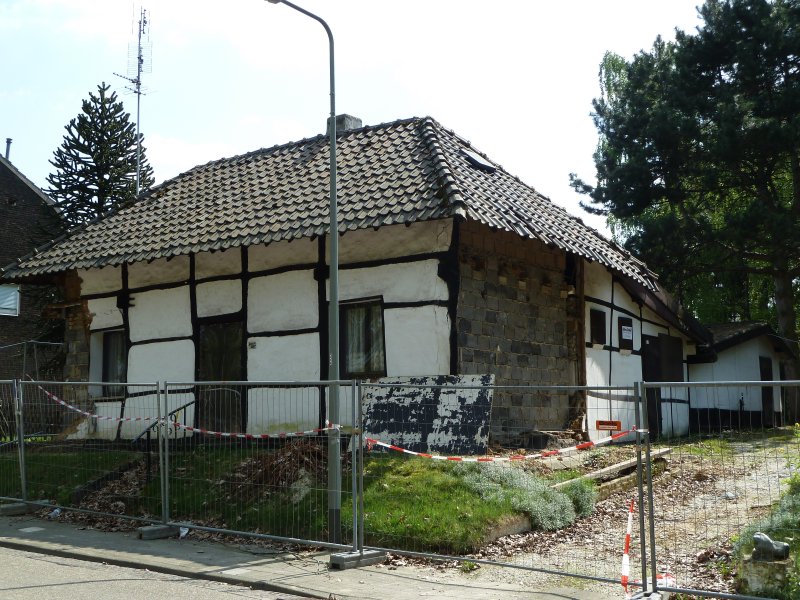
The protected Rijksmonument at Bouwbergstraat 78 in Brunssum is in serious disrepair. A photographic record of its deterioration.

Bouwbergstraat 78, Brunssum

A Monument in Decline

Despite its status as a Rijksmonument since 1967, the half-timbered cottage at Bouwbergstraat 78 has fallen into serious disrepair. The building — once described in its official designation as “eenvoudig doch gaaf vakwerkhuis” (simple yet well-preserved) — now shows extensive structural damage.

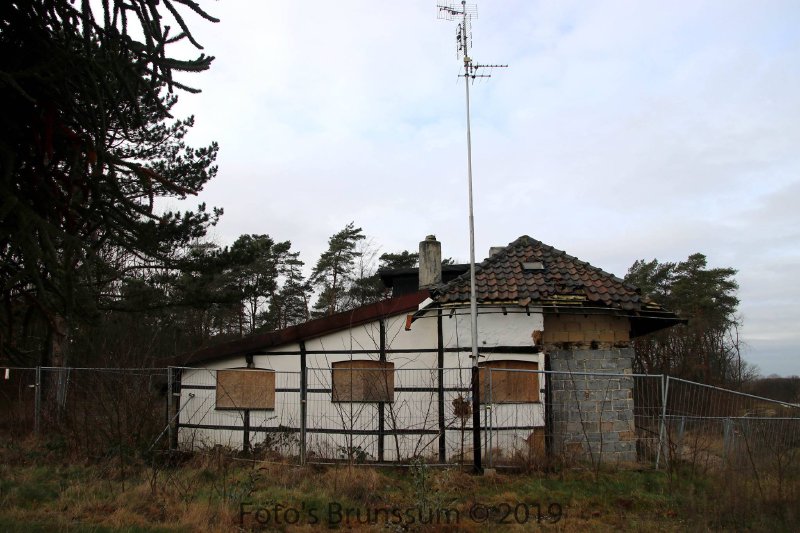
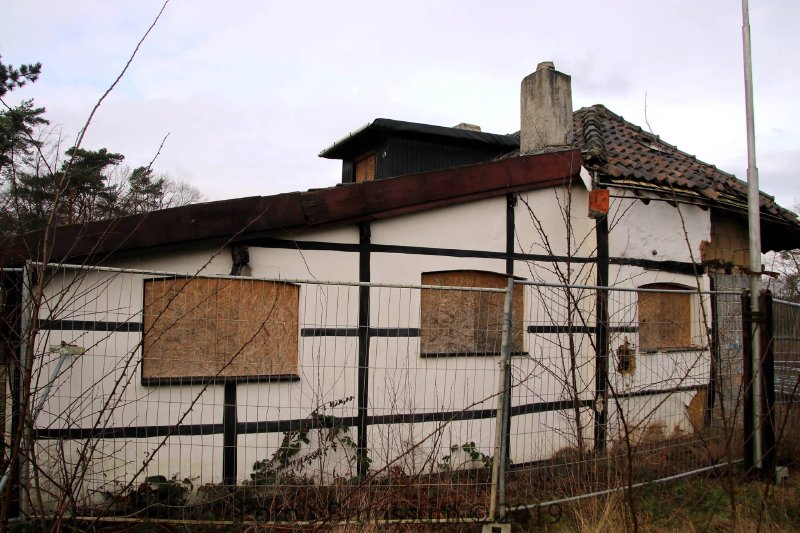
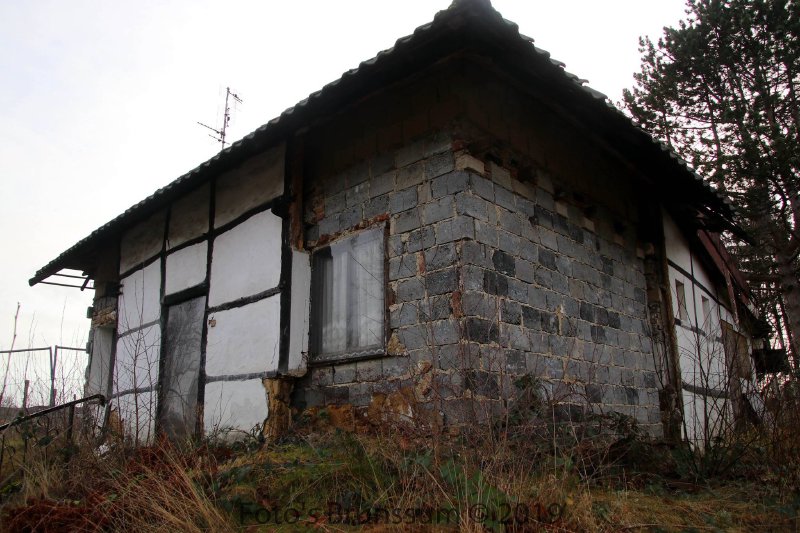
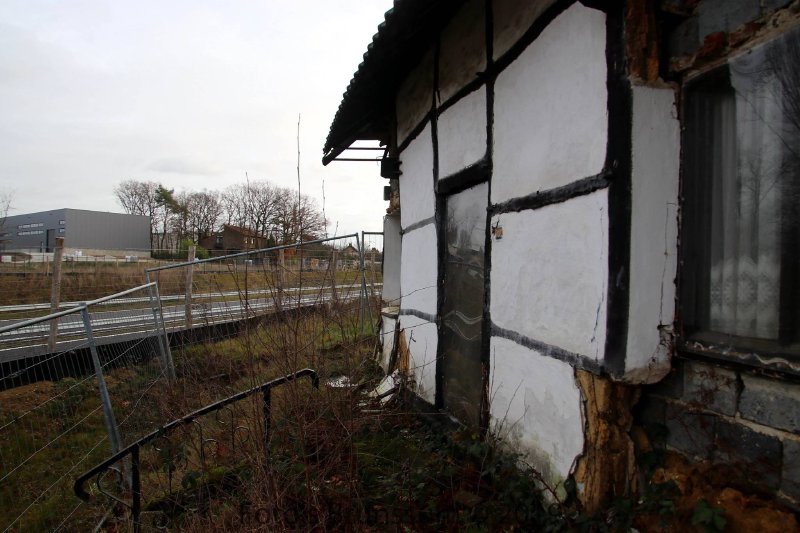
Construction fencing surrounds the property. Sections of the loam-and-straw infill between the oak beams have crumbled away, exposing the underlying stonework and masonry inner walls. The roof is sagging, windows are boarded up, and vegetation has encroached on the site from all sides.

According to local heritage expert Ramon Ranschaert, the masonry inner walls that were added over time kept the structure standing — but also prevented the timber frame from breathing, causing the wood to rot. The full structure was documented by Coen Eggen, author of a booklet on vakwerk (half-timbering) in Limburg.

The last Schmalschläger to live in the cottage was Harry Schmalschläger, who invested considerable effort to maintain the building’s monumental character. After the family left, the cottage changed hands and its condition deteriorated rapidly.


Photo Record (2019)

Photos from the Foto’s Brunssum community archive, documenting the state of the cottage.
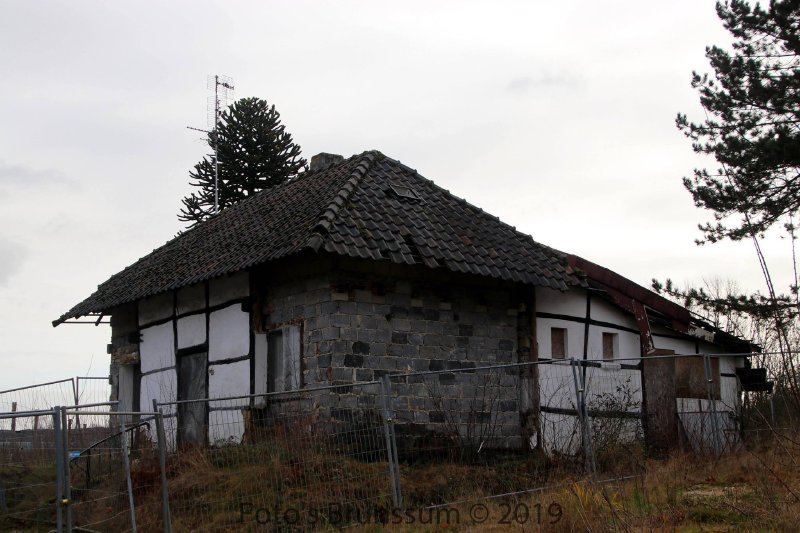
Overview of the Bouwberg cottage behind security fencing, 2019
The cottage surrounded by security fencing, seen from the corner. Source: Foto's Brunssum, 2019.
Front view of the Bouwberg cottage with boarded windows, 2019
The front of the cottage with boarded-up windows and exposed stone corners. Source: Foto's Brunssum, 2019.
The cottage with boarded windows and fencing, 2019
Windows boarded with plywood, fencing surrounding the property. Source: Foto's Brunssum, 2019.
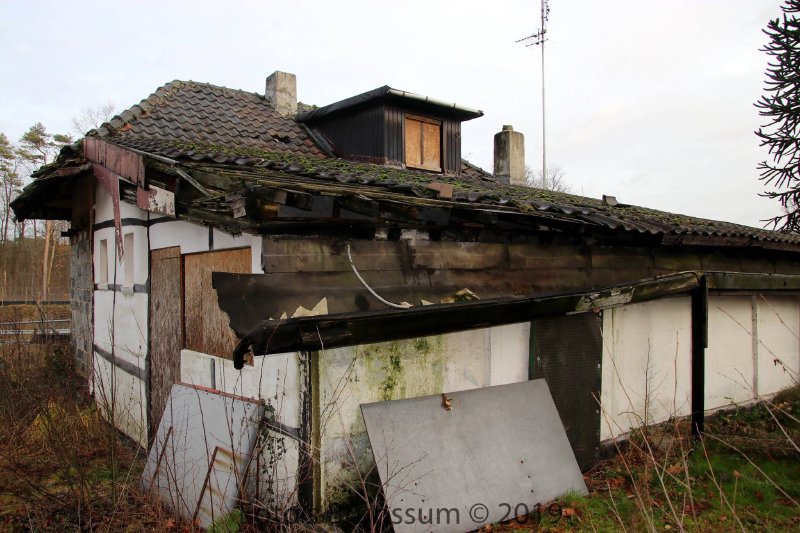
Rear of the cottage showing exposed stonework, 2019
The rear of the cottage showing exposed masonry and deteriorating timber frame. Source: Foto's Brunssum, 2019.
Side view showing crumbling infill panels, 2019
Crumbling infill panels and fencing around the property. Source: Foto's Brunssum, 2019.
The collapsing roof and overgrown annex, 2019
The roof sagging and an overgrown annex structure. Source: Foto's Brunssum, 2019.
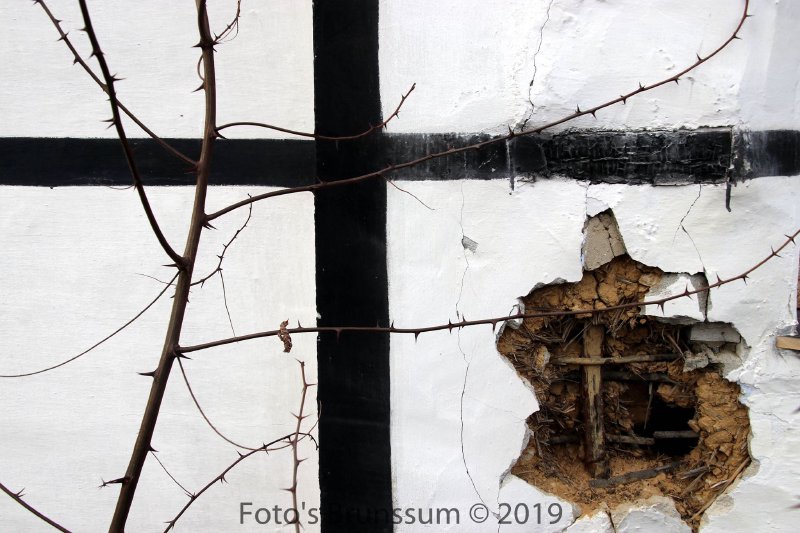
Close-up of cracked wall panel with exposed straw-and-clay infill
Detail: the whitewashed panel has broken away, revealing the original straw-and-clay construction inside the timber frame. Source: Foto's Brunssum, 2019.
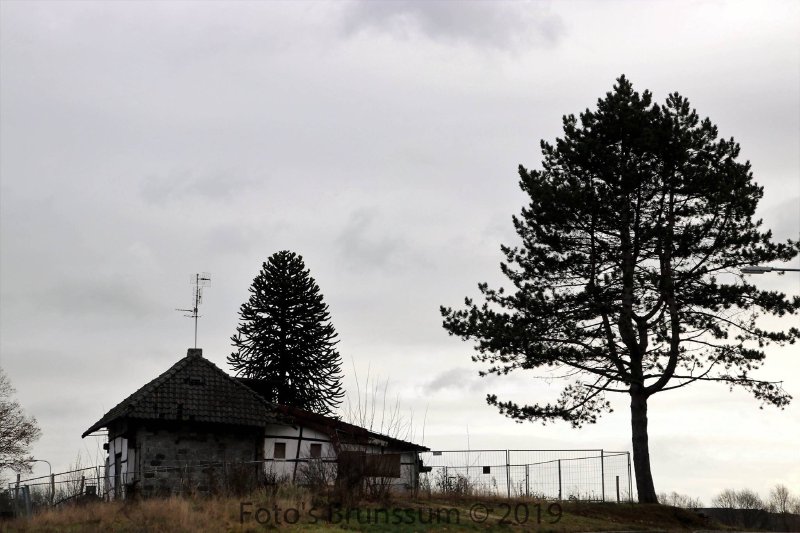
The cottage seen from a distance on the Bouwberg hilltop, 2019
The cottage on the Bouwberg hilltop, surrounded by heath and pine trees. Source: Foto's Brunssum, 2019.
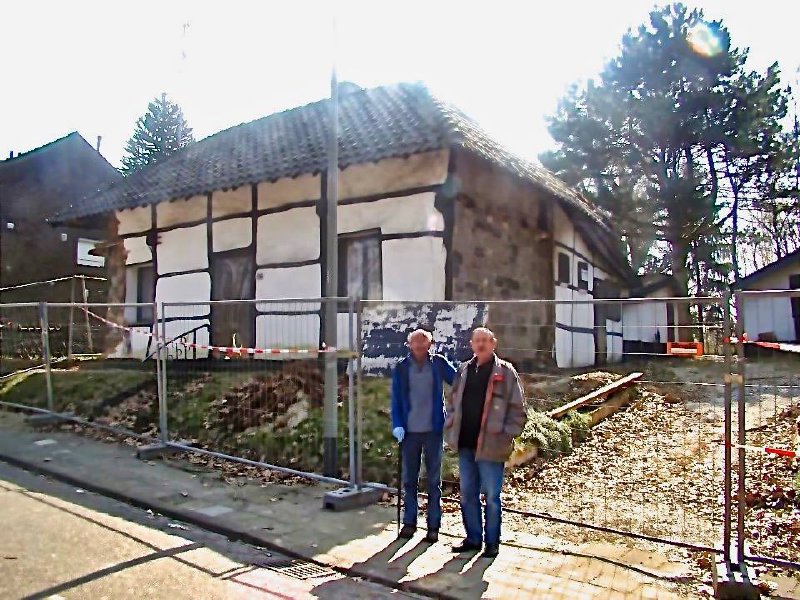
Harry Schmalschläger in front of the Bouwberg cottage
Harry Schmalschläger, the last family member to live in the cottage, revisiting the house after his eviction. Source: Foto's Brunssum, 2019.

Earlier Photos

Bouwbergstraat 78 showing structural damage to the front facade
The front of the cottage showing crumbling infill panels and construction fencing. Photo: Grijmansen, CC BY-SA 3.0, via Wikimedia Commons.
Side view of Bouwbergstraat 78 showing exposed stonework and deterioration
The street side of the cottage with exposed stonework and safety barriers. Photo: Grijmansen, CC BY-SA 3.0, via Wikimedia Commons.
The Bouwberg cottage behind security fencing
The cottage behind security fencing. Source: Foto's Brunssum, Facebook.

The Future

As a nationally protected monument, the cottage’s preservation is a matter of cultural heritage law. Local residents have voiced their frustration at the state of the building — many remember the care Harry Schmalschläger took to keep it in good condition. The current owners have expressed their intention to restore the cottage, but progress has been delayed.

For now, the oldest Schmalschläger home in the Netherlands stands fenced off and slowly crumbling — a reminder that protection on paper does not always translate to preservation in practice.

Bouwberg House →

Sources